If a Seed Sprouts Can It Be Dried and Used Again

Was anyone else really big into sprouting beans when you were a kid? I'm talking the whole put a bean on a damp paper towel inside of a null-top handbag kinda deal. I e'er loved doing that. I thought information technology was so much fun to see this little unassuming bean go from, well, a little unassuming bean into something alive and green. Once the beanstalk was a certain size, my parents would help me transfer the lilliputian dude into a pot with some soil and nosotros'd continue to watch him grow.
Somewhen, something more than interesting would always come along (Sonic the Hedgehog! A new Ghostwriter episode! A flick where Devon Sawa shows his butt!) and my foray into horticulture would end. Only fast frontward to now, and my honey of sprouting things comes in so handy in my kitchen!
I've been collecting your sprouting questions for a few months now, and we accept a lot to cover in this post, then I'm going to dive right in!
What are the benefits of sprouting?
Sprouts are one of the easiest foods you can grow indoors. They require barely whatsoever infinite—if you can fit a Mason jar on your counter, and so you have enough infinite. You lot don't demand whatsoever special equipment. And heck, you don't even need a sunny window! Sprouts are a veggie that everyone tin can (and should) grow.
Bated from the fact that sprouts are an piece of cake, cheap, and tasty vegetable anyone can grow, sprouting also has some real nutritional benefits. Sprouting legumes, grains, and seeds makes them much easier to digest by breaking down the anti-nutrients that are common in those foods. If y'all've ever had troubles digesting a particular grain or legume, I highly recommend trying it sprouted before writing it off all together. You might exist pleasantly surprised that sprouted beans or grains don't carp your body! In general, sprouting also increases the vitamin C and B content and the cobweb! Sprouts rock.
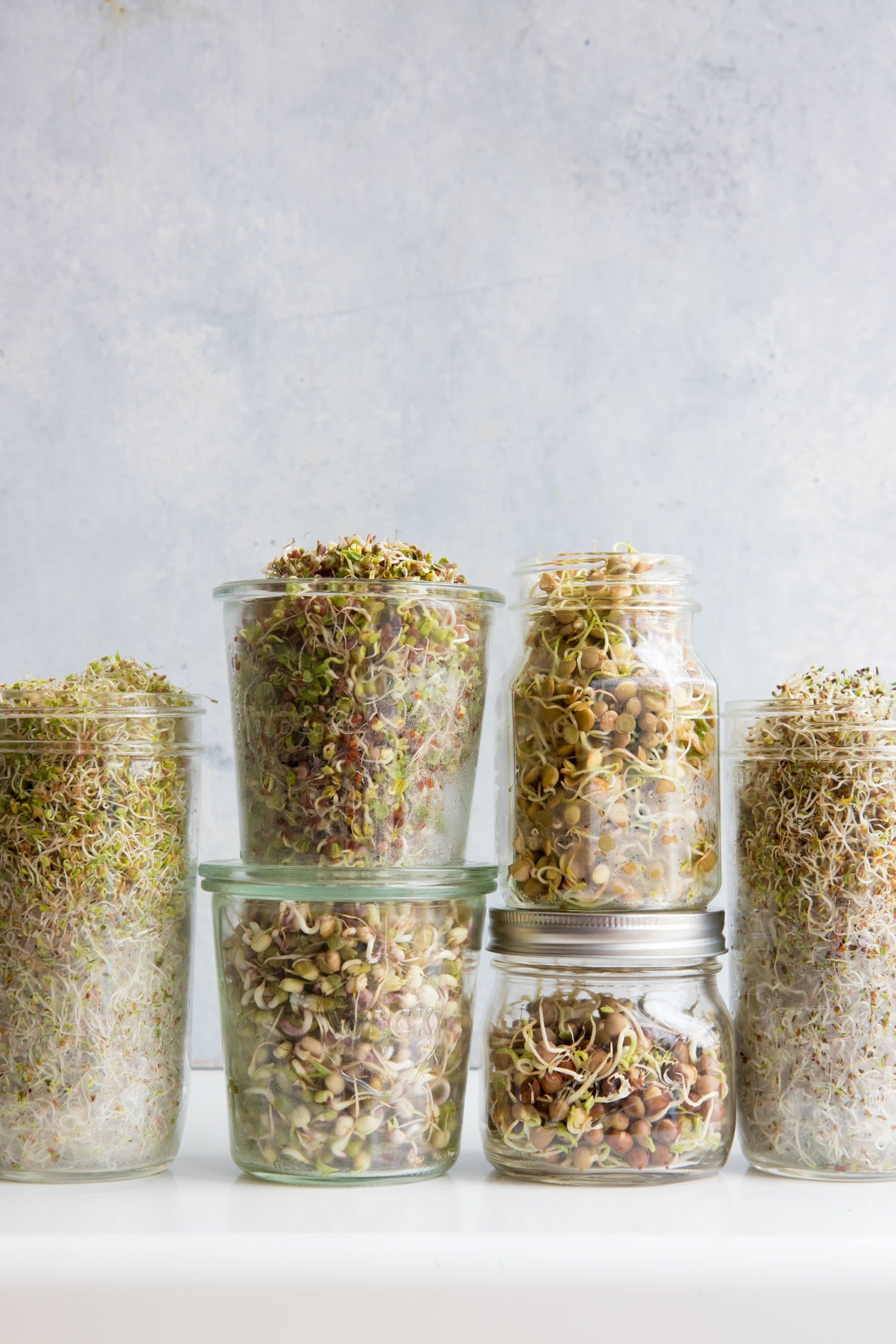
Is information technology safe to sprout?
I know a lot of folks are worried about sprouting safety because there have been so many outbreaks of salmonella and e.coli associated with sprouts from the grocery store. Why is this the case? Well, the warm humid environment that sprouts grow in is also the prime climate for bacteria to spread. In large-scale commercial operations, it'due south almost incommunicable to keep the surround clear from all types of pathogens.
But luckily for you, the gamble of getting a food-borne illness with sprouts is profoundly diminished when yous sprout at home. You control the seeds you use (and if they've been tested to be free of salmonella and e.coli). You control if your sprouting jar is make clean or not. Y'all command how much air apportionment your sprouts get. You control who touches the seeds (and if they launder their hands first). You command how long the sprouts stay in the jar before being rinsed.
Basically, I never buy sprouts from the store (or get sprouts out a restaurant), but I've been happily eating sprouts grown at domicile for a decade at present without a lick of problem. And if you're still concerned, you lot tin always cook your sprouts to put the final nail in the bury of any leftover leaner.
What tin I sprout?
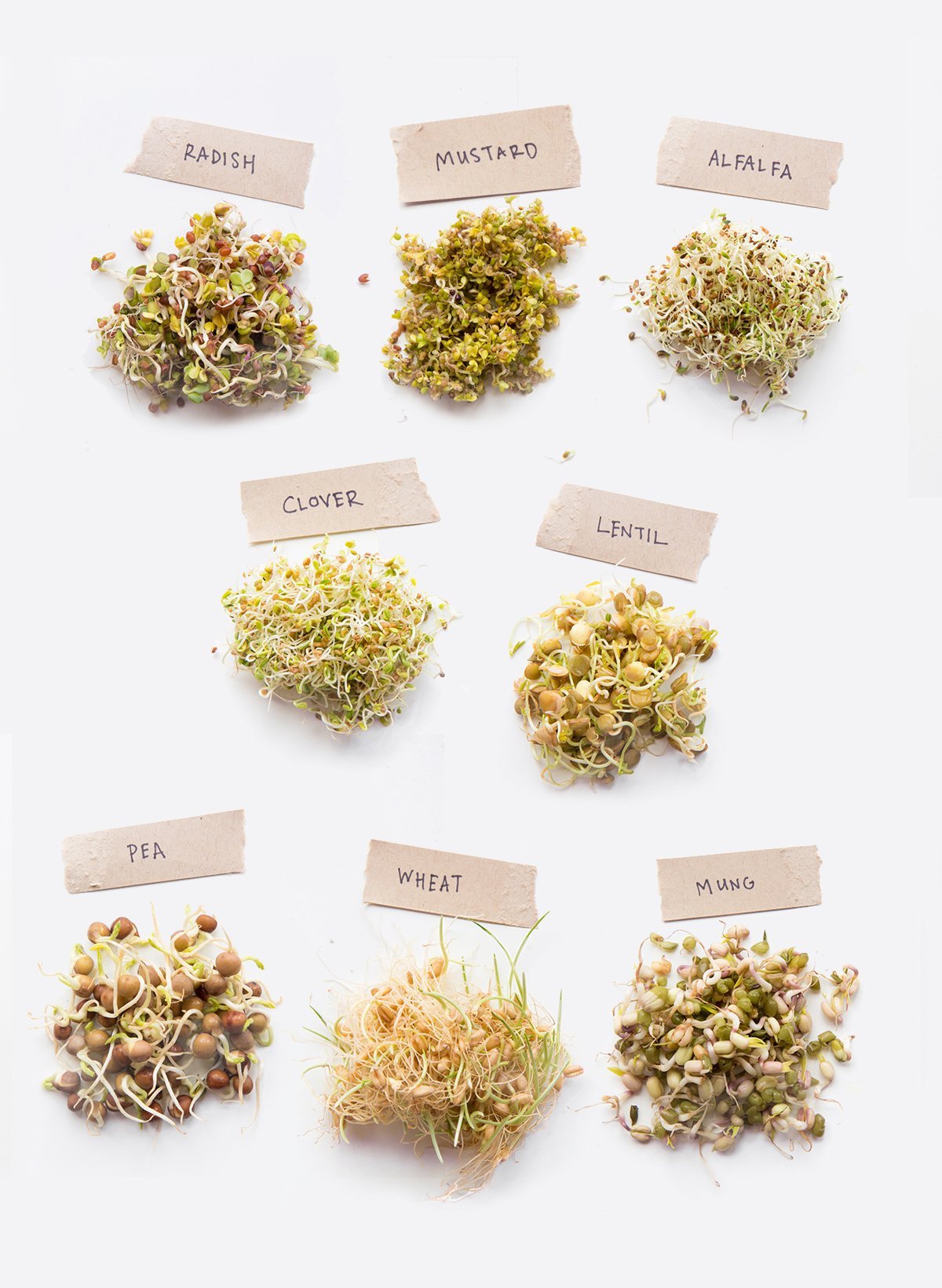
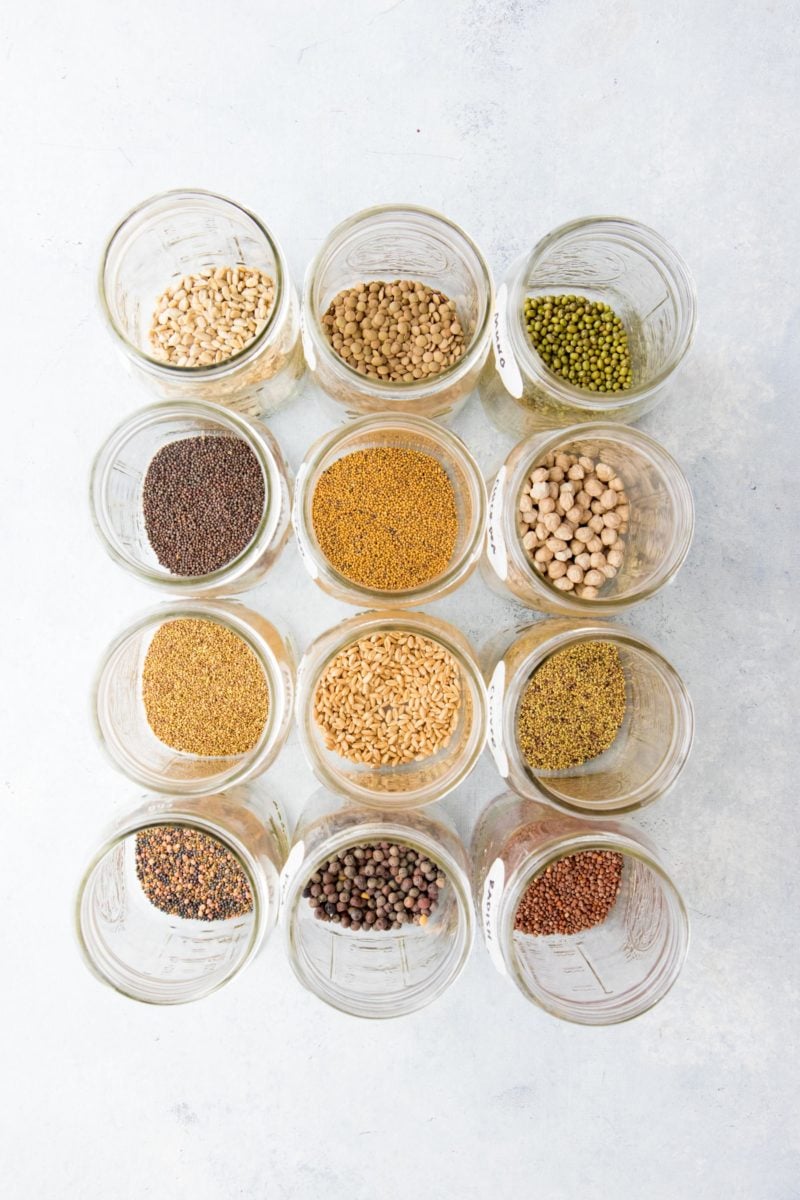
You lot tin sprout near whatever legume, seed, or nut. Everything from chickpeas to alfalfa to kale to onions to clover to mung beans. There are a few exceptions—not because they won't grow a sprout, but because the endeavour required to get it "correct" isn't actually worth it or because they aren't good for y'all.
Chia seeds, flax seeds, and other mucilaginous seeds (the ones that create the goo) are tricky to sprout properly. You lot definitely tin practise it, but I generally just avoid information technology because at that place are so many other seeds that are way easier to sprout.
Avoid sprouting kidney beans for raw eating. They comprise a toxin that causes nausea, vomiting, and diarrhea in many folks. If you lot do choose to sprout kidney beans, make sure to eddy the finished sprouts for at to the lowest degree 10 minutes before consuming them.
Quinoa contains a loftier concentration of saponins, which in some folks causes a strong allergic reaction that makes them feel ill.
Basics like almonds don't really make sprouts, they brand "soaks," which is what information technology'south called when a seed doesn't produce a root during the sprouting process. They are still delicious, and the soaking procedure helps break down the anti-nutrients and makes them a healthier pick. Then if you like, y'all can dehydrate them if yous want crunchy snacking nuts.
Do I need special sprouting seeds?
Technically, no. You can walk into the grocery shop and pick upward a bag of lentils, and chances are, they'll sprout fine. BUT, I recommend you buy sprouting specific seeds for 2 reasons:
Here in us, many foods that come in from other countries are irradiated to stop sprouting before they striking our grocery store shelves. This means that no matter how well you take care of your seeds, they are never going to sprout.
Sprouting seeds are all tested and verified to be free of e.coli and salmonella. Growers of sprouting-specific seeds have great intendance to make sure the seeds they sell are very clean—meaning they are gratis of harmful bacteria and other pathogens that tin can thrive in the sprouting environment. That bag of lentils you picked up from the grocery shop? The packagers of that were assuming your program was to boil them at high heat—which would impale whatever pathogens. Sprouting seed providers know that isn't the programme for their seeds and adjust their growing and packaging processes accordingly.
Where practice I get sprouting seeds?
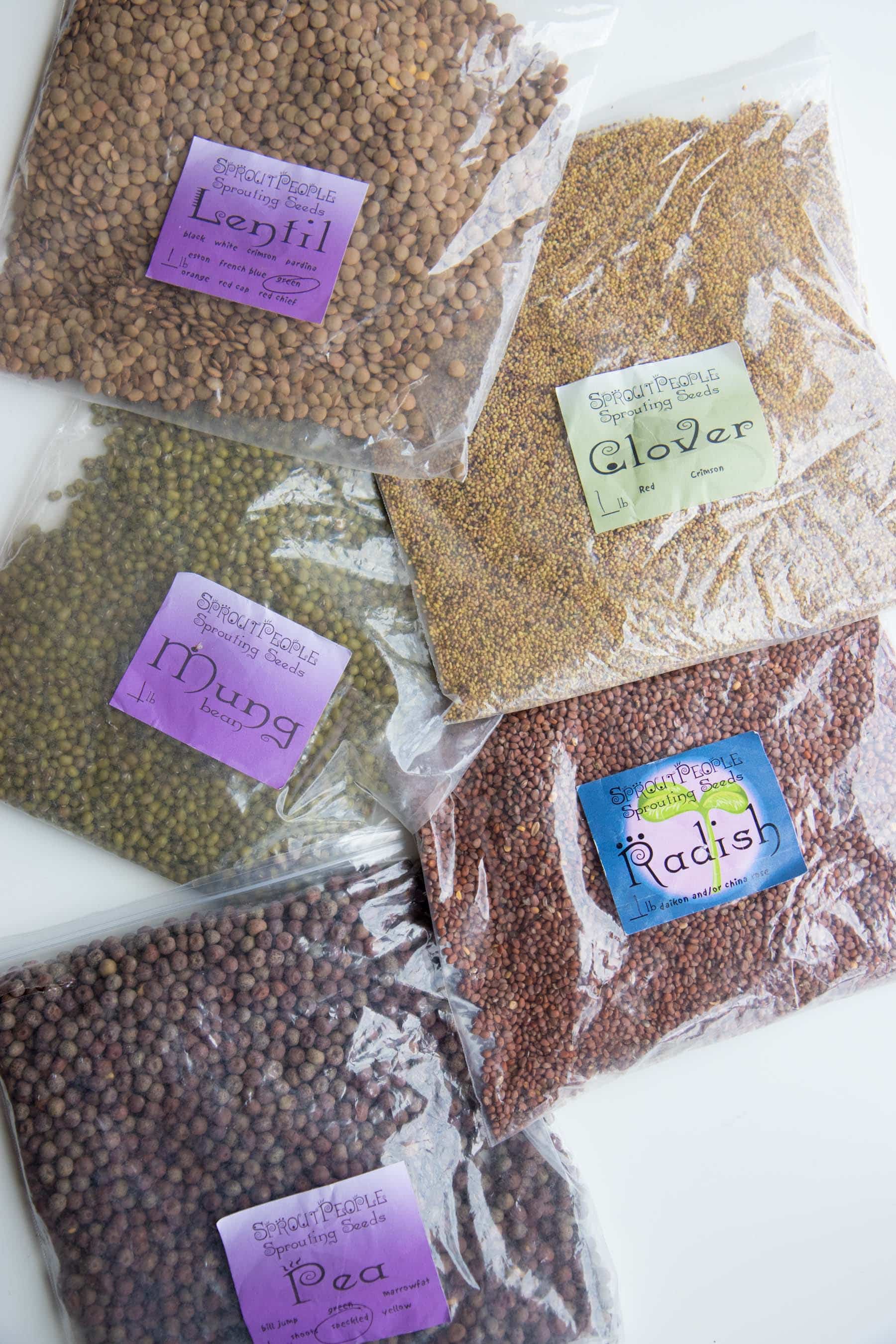
My local health food store carries some packets of sprouting seeds, but the vast majority of my sprouting seeds I buy online. I've ordered sprouting seeds and mixes from Johnny's Seeds (I really like their Organic Sprout Mix). But far and abroad, my favorite identify to society sprouting seeds is from Sprout People. They accept an amazing option of varieties, mixes, and tools. I've also been actually impressed with their formation rates and how long the seeds stay viable. I accept a few bags from them that are going on three years quondam—and they sprout but likewise equally they did the day I go them.
Exercise I need special tools?
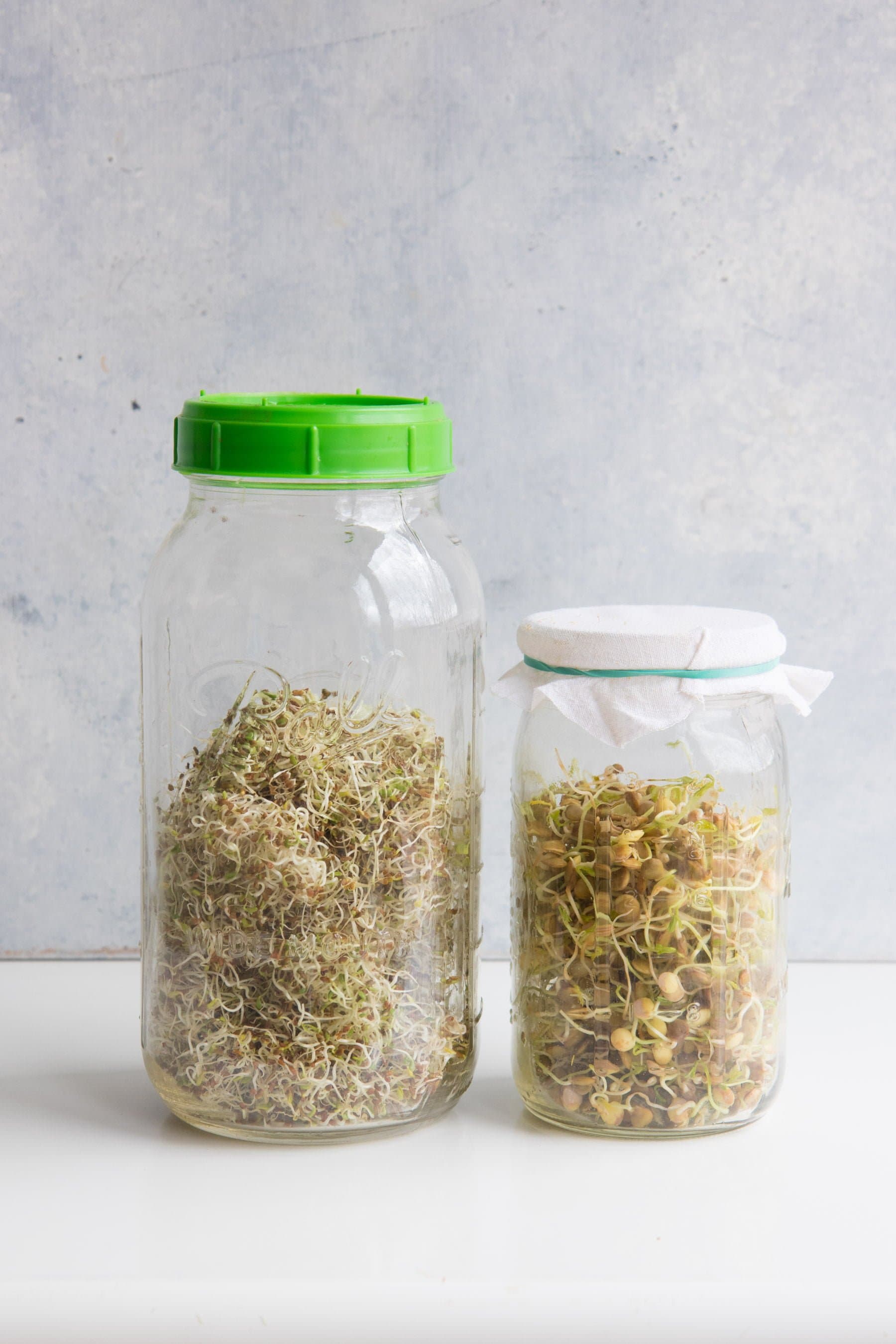
Nope. To go started, all you need is a large clear jar (you don't fifty-fifty need a hat), a small piece of natural, breathable fabric (cotton and cheesecloth both work), and a rubber band. That's it. We tend to use wide mouth quart Stonemason jars for most sprouts, only sometimes we'll also exercise broad mouth half-gallon Mason jars if nosotros want a lot of sprouts. If you find yourself enjoying sprouting, so I do recommend spending the few bucks on these sprouter lids that fit on wide-oral fissure Bricklayer jars. They make the rinsing and draining procedure e'er so slightly easier.
Tin my fur-and-feather babies consume sprouts, too?
Oh, heck yes they tin! Chickens, in particular, will devour sprouts similar it'south their job (which it kinda is—to turn those sprouts in my eggs for breakfast). During the winter, I like to grow a few batches of sprouts per calendar month for the chickens to become them some fresh nutrient. We like these bird mixes from Sprout People and this foraging mix from Peaceful Valley (we also plant that foraging mix).
Dogs and cats are less apt to swallow seed sprouts themselves, but they do love themselves some wheat grass—which just means you need to permit your wheat sprouts abound a lilliputian bit longer!
Can I make sprouted grain flour at home?
Sure can. Follow the process below for whatever grain you desire to use (wheat, rye, etc.), but only let your seeds just begin to sprout—you're looking for at about 1/4" of a sprout. Then place them in a food dehydrator on the lowest setting until completely dry—virtually 24 hours. Grind in a grain mill, and voila, homemade sprouted grain flour! You'll probably want to do a larger volume of sprout (using a half gallon jar works) to make enough for blistering.
Okay, how do I actually sprout?
The sprouting procedure is a breeze. Let me walk you through information technology:
Footstep one: Soak your seeds
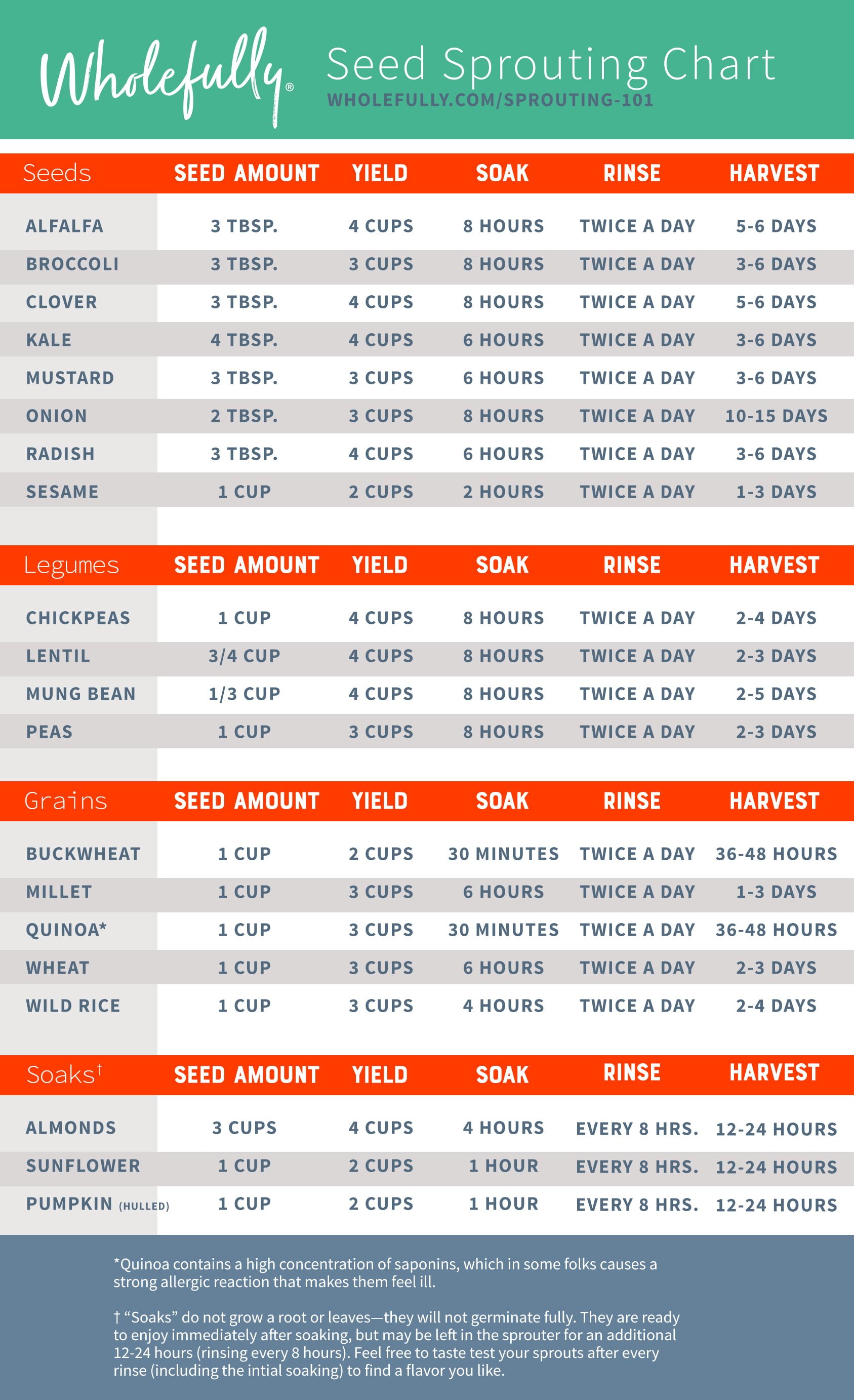
Different seeds will soak up different amounts of water, merely a good dominion of thumb is to employ three parts water to 1 part seed. How much seed do you lot use? Well, it depends on the seed, the size of your container, and how much sprouts you want in the end. I made a handy-dandy little chart for some of the most mutual kinds of sprouts (you can click to enlarge and print).
Place the seed in a make clean Mason jar, embrace with cool water, and then stir to make certain all seeds are wet. Y'all tin can leave the jar open up (that's what I normally practise), or you tin can cover information technology with either a sprouter lid on height of the jar or a piece of breathable natural fabric (similar cheesecloth or muslin) secured with a rubber band. Set it aside to soak for the listed corporeality of fourth dimension.
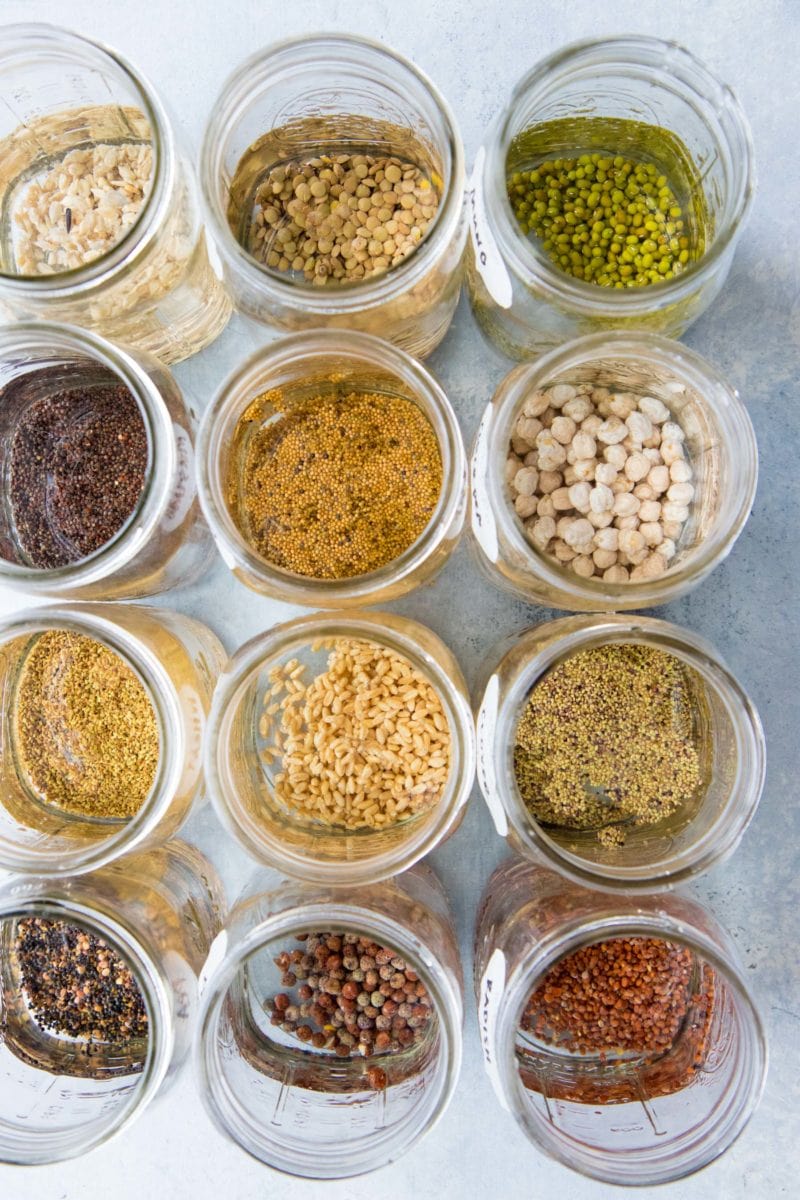
A annotation most soaking: you don't really demand to stress about soaking precisely what'south listed in the chart. Yous aren't going to mess your sprouts up if yous soak for ten hours instead of eight.
Step 2: Drain and rinse your sprouts
Once the soaking time is up, you demand to drain your sprouts. If you have a sprouter chapeau, just tip the whole jar over the sink and permit the water rush out. If you used the cloth method, remove the rubber ring and cloth, and place a fine mesh sieve over peak of the jar. Capsize information technology over the sink and let drain.
Then add more fresh, cool h2o to the jar, swirl it around a little bit, and rinse out that h2o. Make sure to really shake out every bit much water every bit you can.
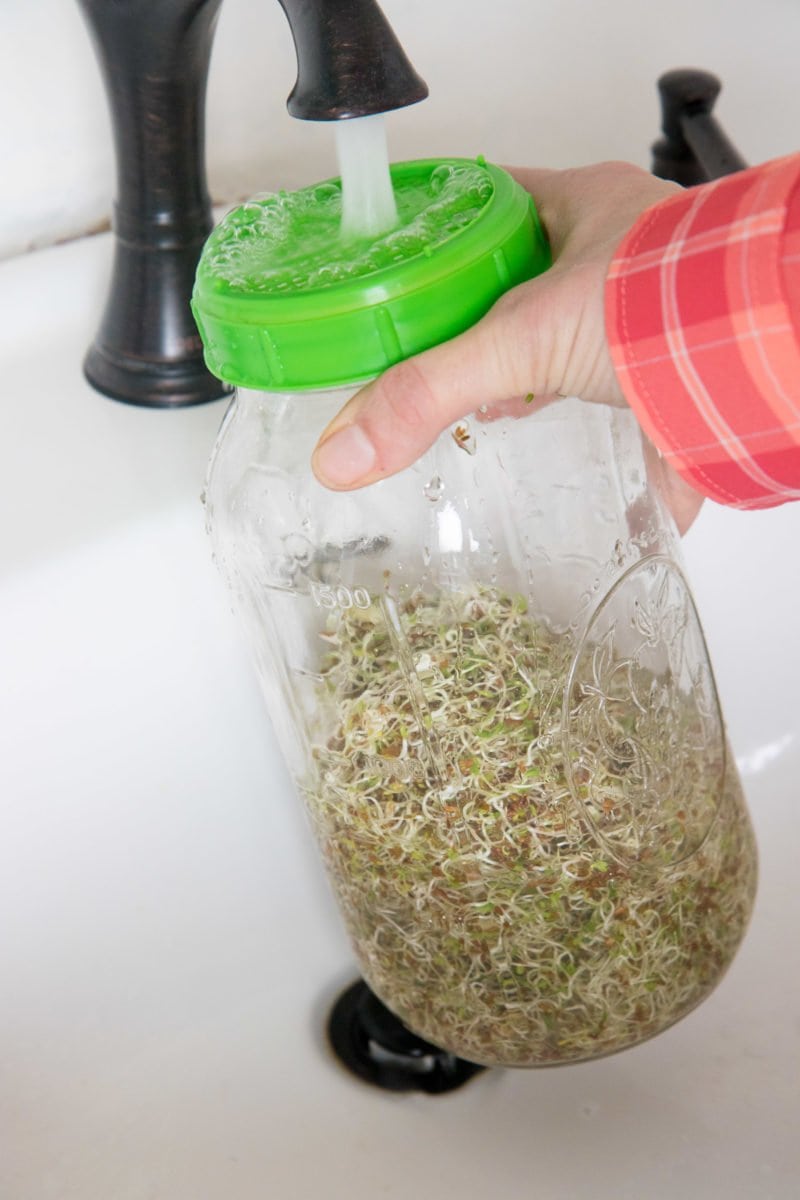
Once the sprouts are all rinsed, I like to turn the jar in my manus and then equally many seeds as possible stick to the outside of the jar. This tends to get a flake better of a germination rate for me. Then prop the jar, upside-down, in a bowl, like then:
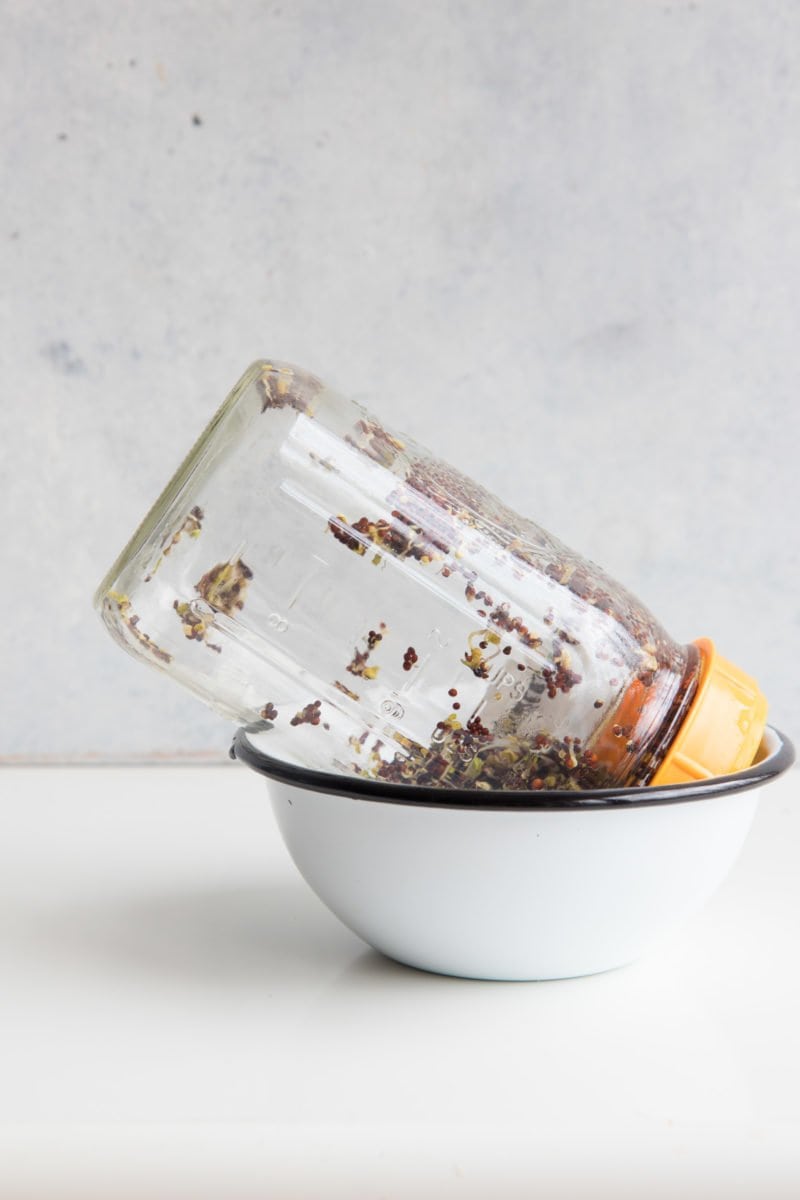
It's of import to go on the sprouts draining nicely, and this trivial trick seems to do information technology well. Gear up it in an out-of-the-way-but-not-forgettable spot. It doesn't need to have sunshine (although, it doesn't hurt), just it does need to exist able to breathe. So I wouldn't recommend storing it in a cabinet. I just exercise my sprouts on my kitchen counter.
Footstep 3: Rinse, drain, repeat.
Now your only chore is to visit your sprouts twice a day (for near sprouts) and rinse them with fresh, cool water, drain, and prop back up in the bowl (you might want to empty out the water that nerveless in the bowl at this point, besides).
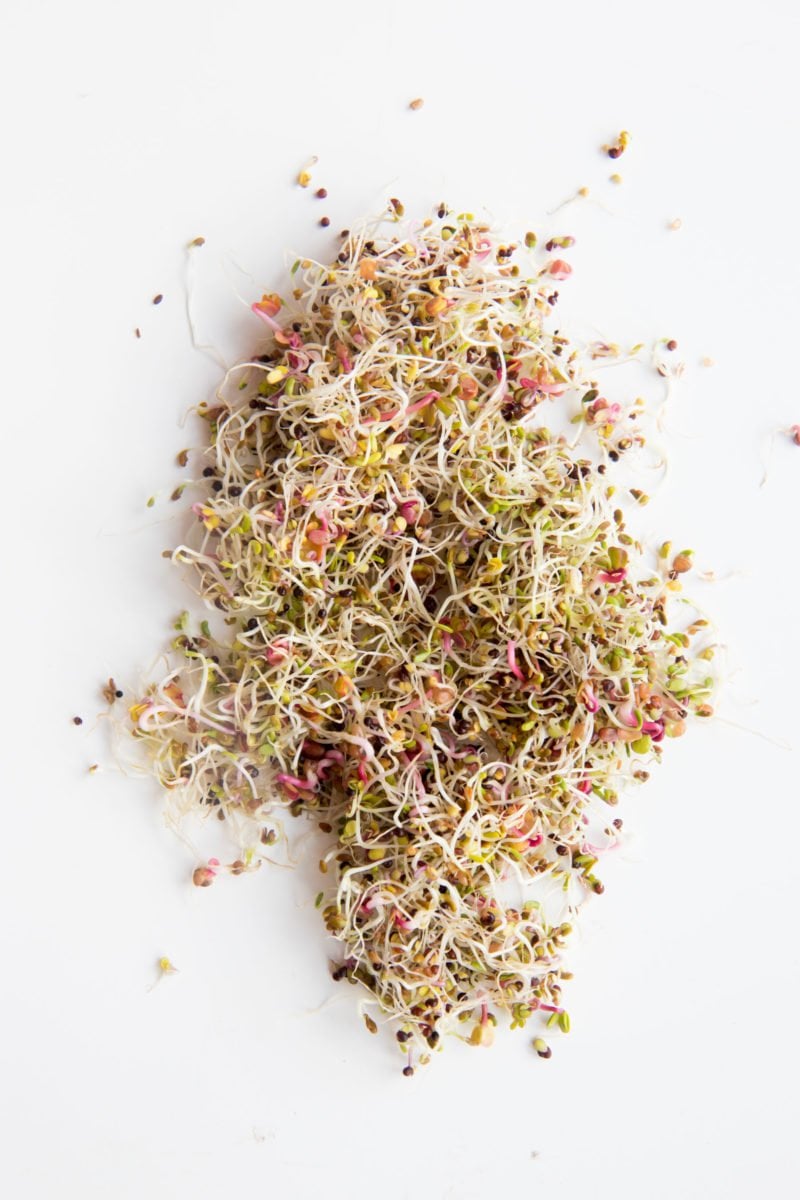
For most seeds, you'll start to run across little baby sprouts within a day or so. You can honestly harvest and consume your sprouts at any stage, but virtually folks prefer to harvest sprouts that are i/2-ii" long. Go on on rinsing and draining until you lot get to the length you want.
Step 4: Harvest, store, and use your sprouts!
You lot're ready to harvest…now what? Requite your sprouts ane terminal rinse and drain, and then remove the jar lid and dump all the sprouts out onto a make clean, absorbent kitchen towel. Spread them all out onto one layer and let them air dry out for 30-hour before storing.
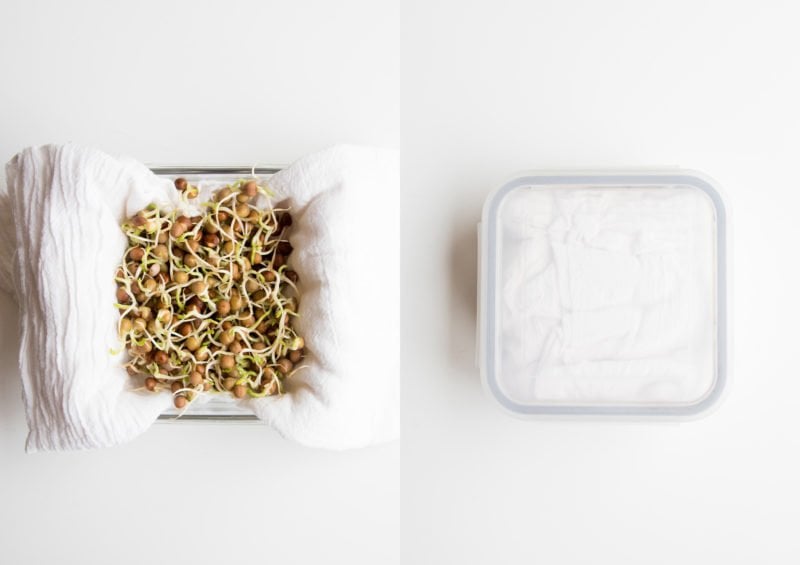
To shop: I like to line a glass nutrient storage container with a make clean tea towel (paper towels work too) and and so put the sprouts in. Then I wrap the sprouts up and shut the container. Extra wet is the enemy of sprouts (and most produce—this trick besides works with herbs, lettuces, and other greens). Store in the fridge for up to a week.
You tin now use your sprouts in whatever mode that pleases you. I dearest them on sandwiches, in wraps, on salads (or even as the entire base of operations of a salad). Bean sprouts are great in stir fries, frittatas, and scrambles. The possibilities are endless!
Optional Step 4a: Rinse away the hulls
I almost never do this, but some people similar to rinse away the hulls (the outer seed coatings) on their sprouts in one case the sprouts are finished. Here is a great tutorial on how to rinse away the hulls with a salad spinner.
Troubleshooting
Why practise my sprouts always go moldy?
Guess what? There is a very strong take a chance that your sprouts aren't moldy at all, you're only seeing the fine root hairs that look A LOT like mold. Like, a lot, a lot. Root hairs start to show up when the sprout is at its driest (and that'south why you encounter them when you lot go to rinse your sprouts over again). If y'all employ clean seeds, a make clean sprouter, and make sure air is circulating (don't go on your sprouts in a cabinet), the chances of having moldy sprouts is pretty slim. And aye, this applies to high humidity climates, too. I've sprouted without mold even in those glorious xc%/ninety° Indiana summer estrus waves.
How do you tell the difference between mold and root hairs? Well, when you rinse your sprouts, does all the "mold" magically disappear? If so, then it's root hairs. The water makes the fuzz fall back against the master root until they dry out out once again. You can also tell considering mold smells! Root hairs don't. Use your sniffer.
Fruit flies are all over my sprouts! What practise I do?
Sigh. Fruit flies are a natural (and annoying) part of having fresh produce—including sprouts—in your life in the summer. We utilize apple cider vinegar fruit fly traps to endeavour to continue the population downward, but just accept that nosotros're going to accept some houseguests for the warm atmospheric condition months. To keep fruit flies out of your sprouts, I recommend using the cloth method instead of sprouting lids. The cloth keeps the fruit flies out, but they tin fly through the sprouting lids. If you practice notice fruit flies flying in and out of your sprouts, I'd recommend composting the batch and starting again (although, I hear insects are a proficient source of poly peptide…).
I think my sprouts have gone bad in the refrigerator, how practise I know?
Again, employ your sniffer! Bad sprouts smell "off" and rancid. Many sprouts will also start to rust right earlier they go bad—and then if they don't aroma bad but suddenly look a bit rusty or brown, brand sure to use them upward that day. In general, sprouts can keep around a week in the fridge when stored properly.
Phew, did you arrive through all of that? If so, you are completely well-versed in the world of sprouting and ready to become gild yourself some seeds and get going! Equally always, if you take any questions, go out a comment below, connect with me on social media, or shoot me an email. Happy sprouting!
Source: https://wholefully.com/sprouting-101/
0 Response to "If a Seed Sprouts Can It Be Dried and Used Again"
Enviar um comentário